Cutting to Size, Perforating and Primary Holes
Create fabrication files from flat patterns, hole type, spacing, edge distance and panel IDs for regular hole arrays and primary profiles.
Equipment is only one part of the conditions needed for fabrication. What determines whether an order can be delivered reliably is whether there is one approved drawing version, which process route matches the product, how the first article is approved, how the batch process is reviewed, and how finished products are numbered, protected and delivered.
The following fabrication options can enter project review. Specific equipment, usable dimensions, material range, processing accuracy and lead time are subject to written confirmation based on the drawings, material, quantity, samples and current production schedule.
Create fabrication files from flat patterns, hole type, spacing, edge distance and panel IDs for regular hole arrays and primary profiles.
Assess the manufacturability of freeform profiles, patterned cut-outs, grooves, equipment clearances and fine connecting areas.
Translate returns, angles, grooves, terminations and installation edges into flat-pattern dimensions and an operation sequence.
Select the forming route from radius, arc length, spatial coordinates, panel divisions and interfaces, then approve the first article.
Complete corner closures, joints, mounting tabs, reinforcement and weld finishing without affecting the decorative face.
Organize same-batch finishing according to the approved color sample, gloss, coated faces, hanging points and protection requirements.
Review the face sheet, back sheet, core, adhesive system, overall thickness, pressing, curing and edge construction together.
Select an engraving, die-pressing or roller-embossing direction based on artwork, depth, dimensions, quantity and a detail sample.
Record panel IDs, installation zones, direction, grouped relationships and protection of raised areas in the delivery list.
This page explains the logic of process review and delivery. Ownership of particular equipment does not replace order-specific confirmation of workable dimensions, materials, accuracy and production schedule.
Aluminum solid panels, honeycomb panels and reliefs can share sheet processing, finishing and numbering management, but their core forming, construction confirmation and quality priorities cannot be treated as interchangeable.
The photos below cover primary processing, bending, curved forming, welding, honeycomb bonding and surface treatment. They explain the operations; whether a specific order uses a particular machine remains subject to drawing review and production scheduling.
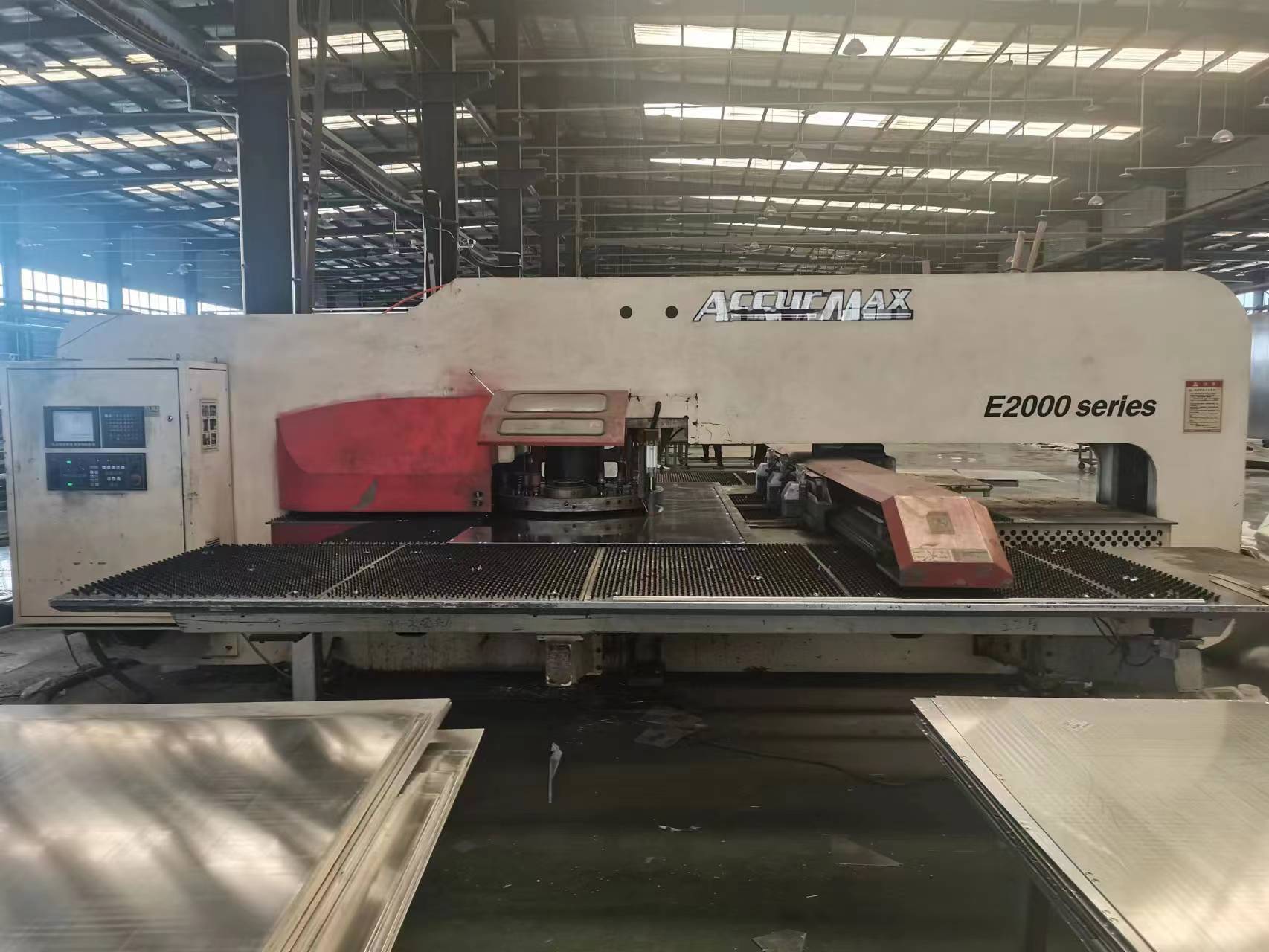
Punching and primary panel processing begin after the program, panel IDs, hole positions and profiles correspond.
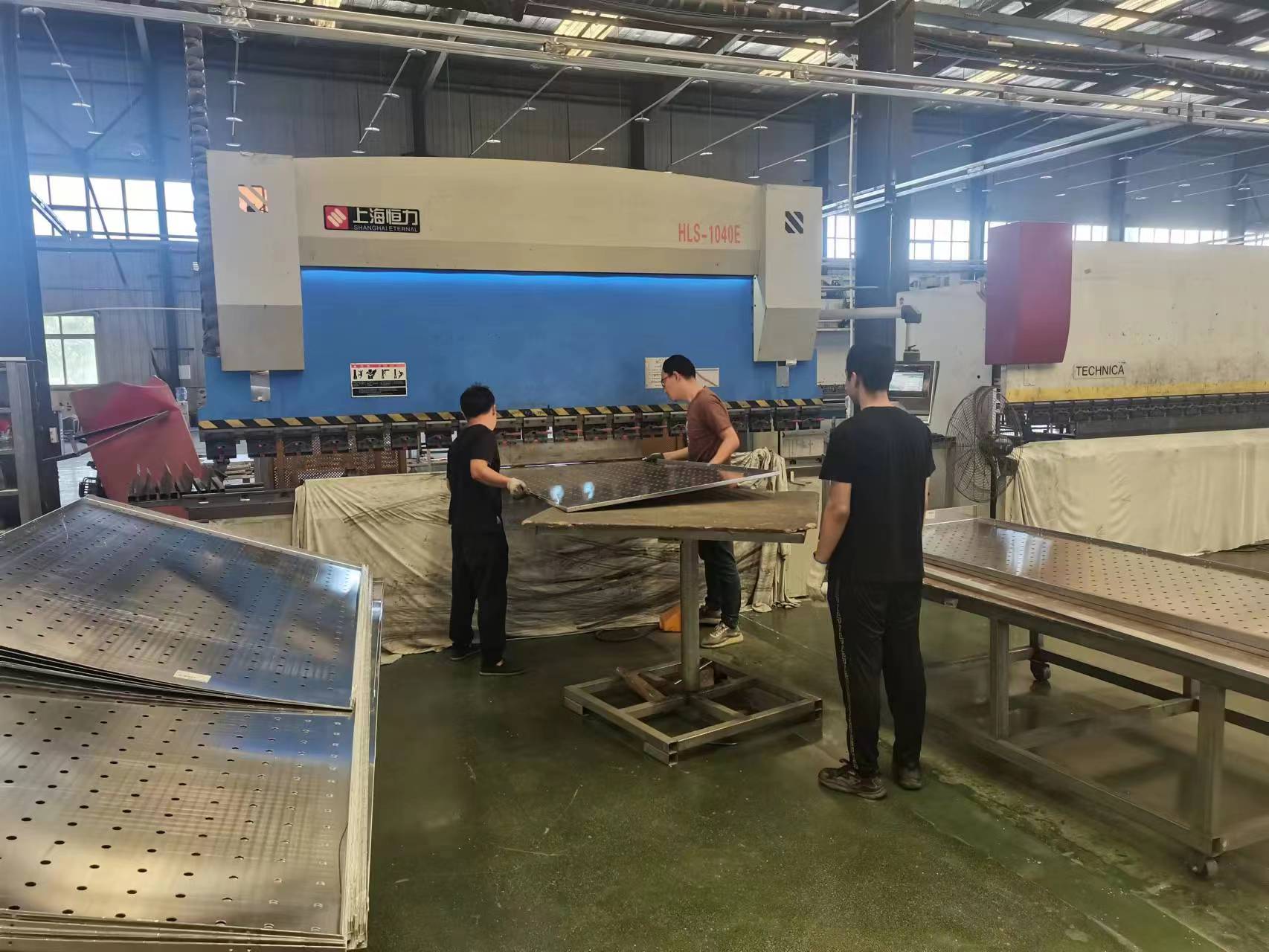
Returns and supporting panels are formed in sequence according to flat-pattern dimensions, bend lines and angles.
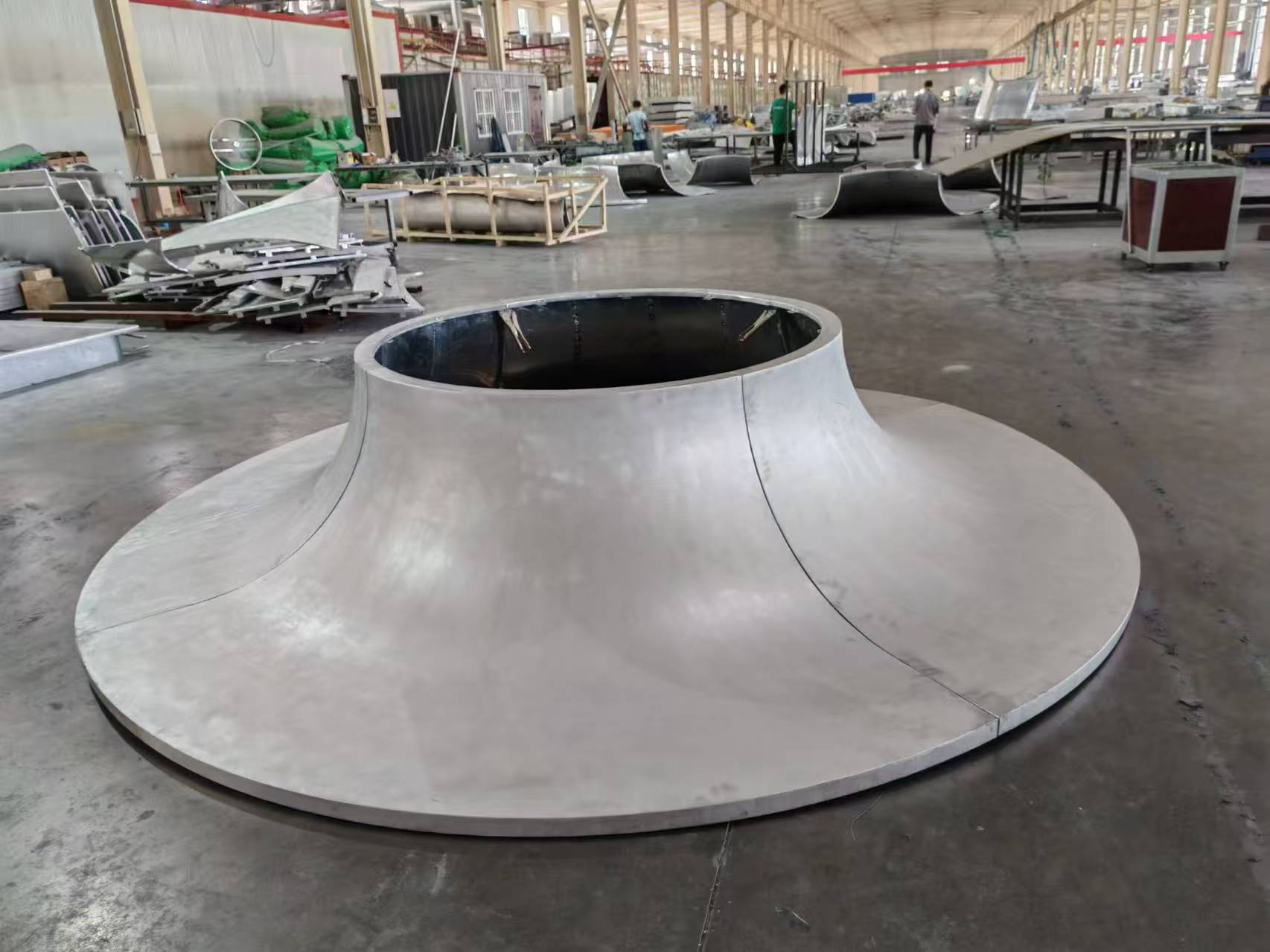
Model divisions, spatial curvature and joining boundaries are reviewed through first-article checks and grouped trial assembly.
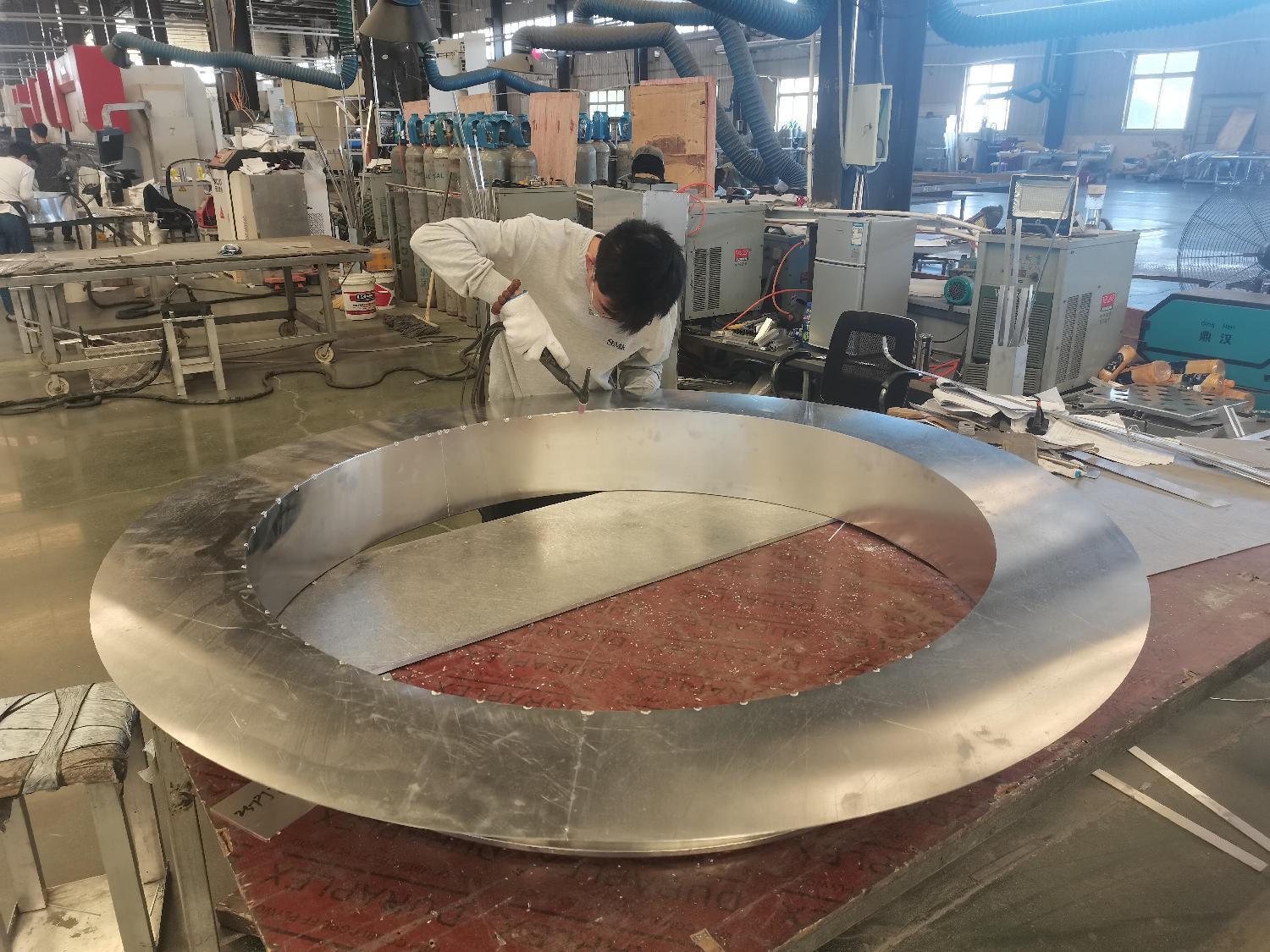
After corner closures, connections, mounting tabs and reinforcement are completed, weld finishing and panel condition are checked.
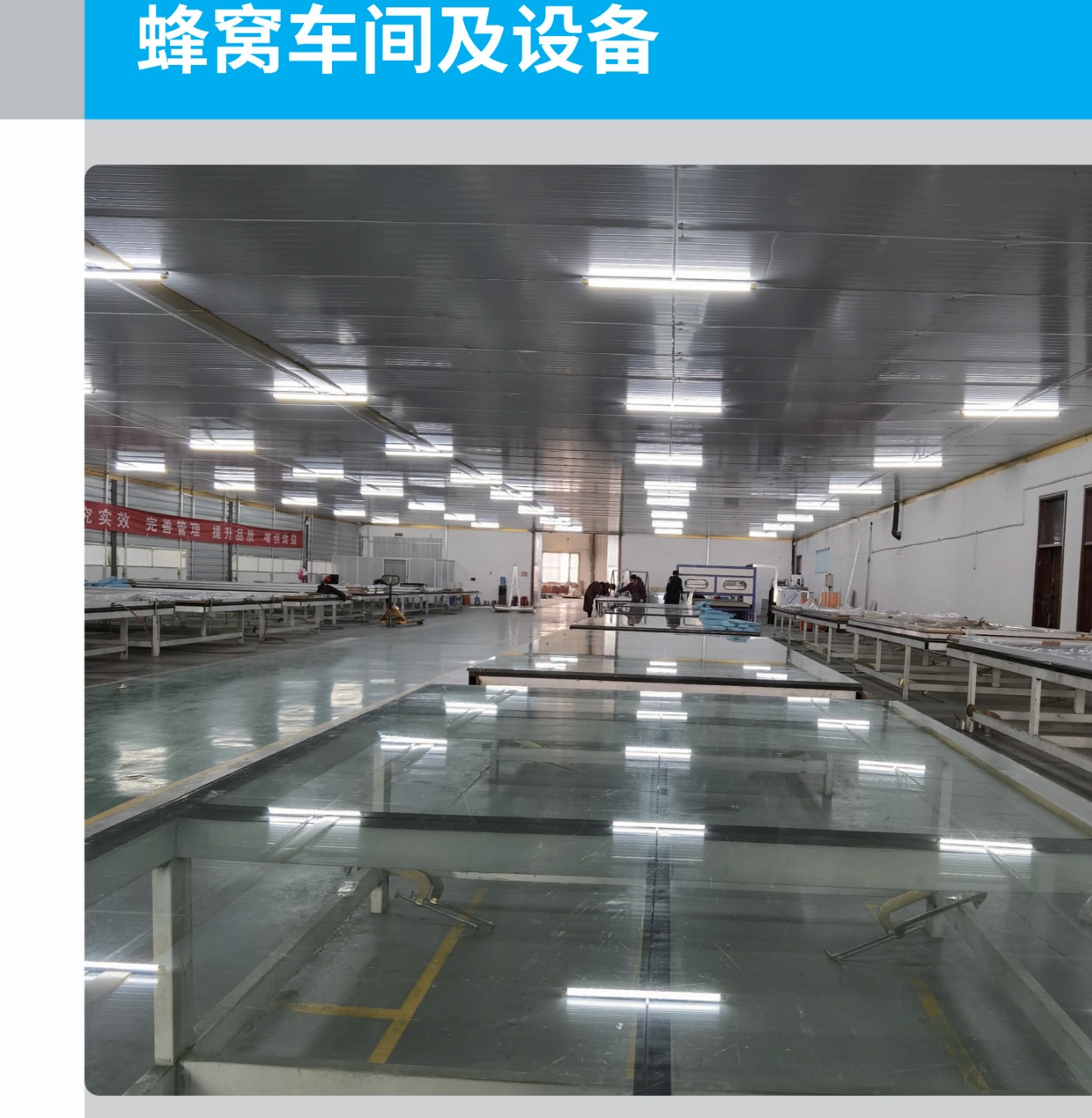
Lay-up, pressing and curing depend on the construction version and process conditions; bonding quality cannot be judged from an equipment photo alone.
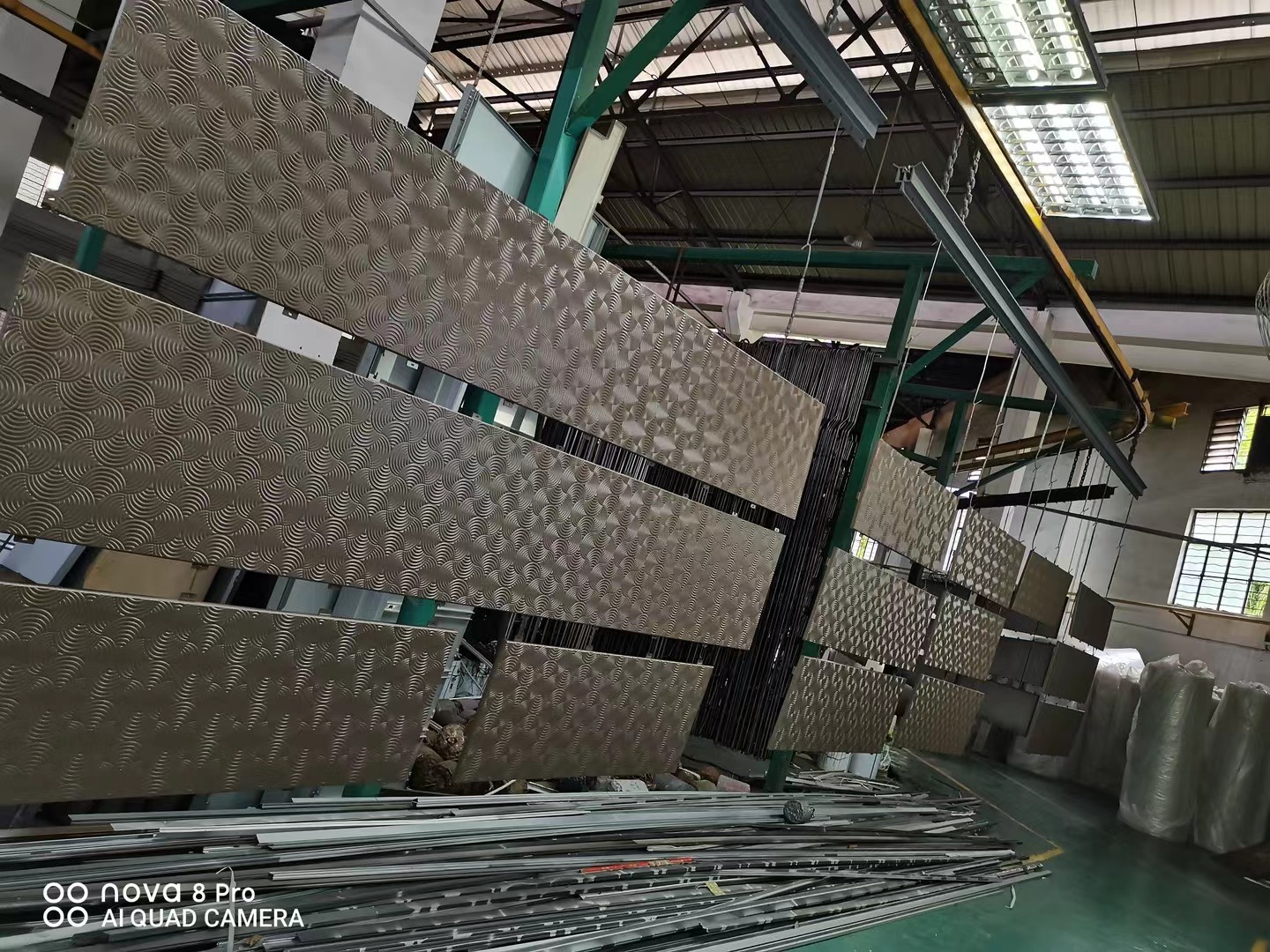
Pattern repeat, panel direction, hanging direction and same-batch surface condition must remain consistent.
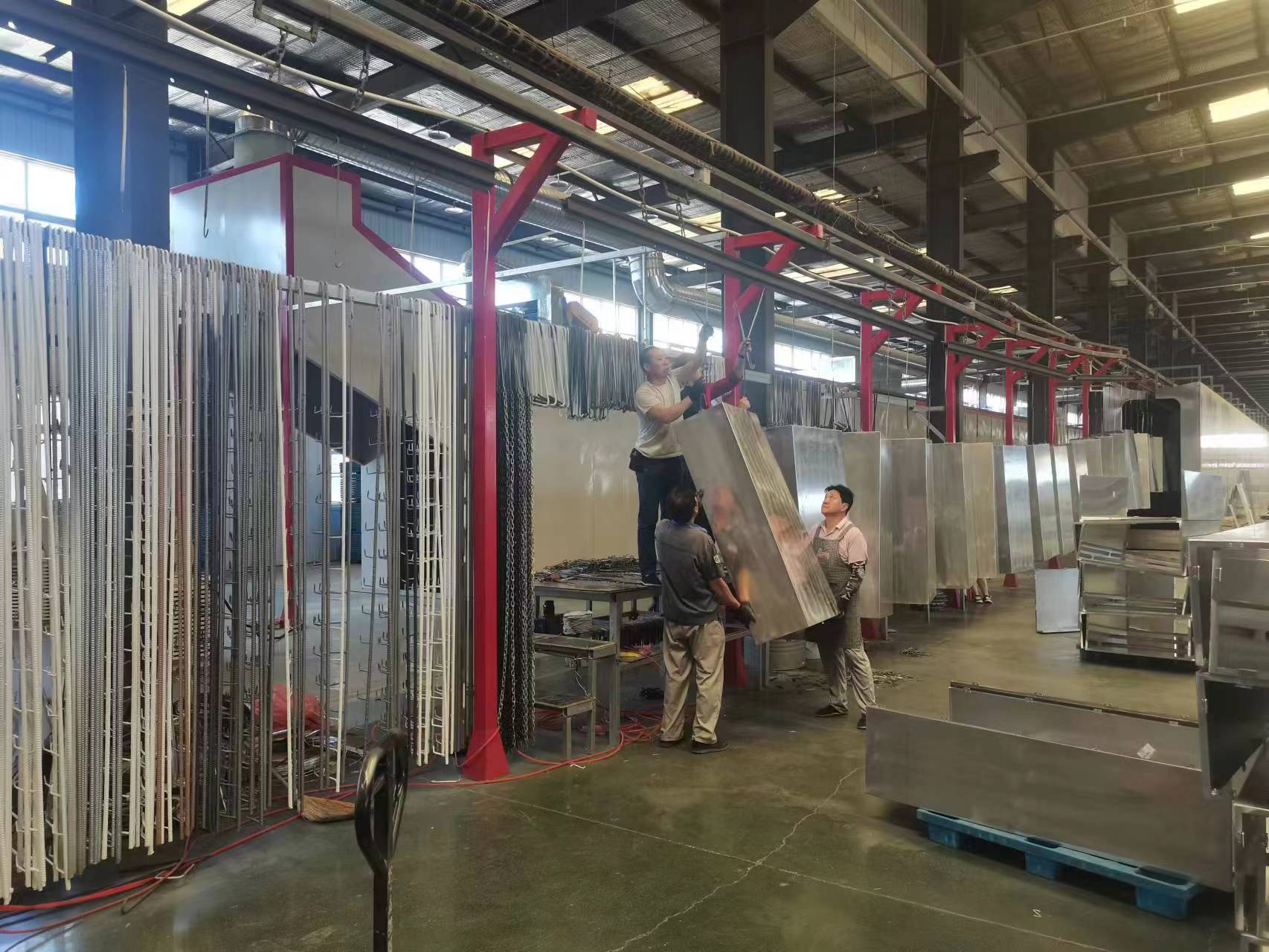
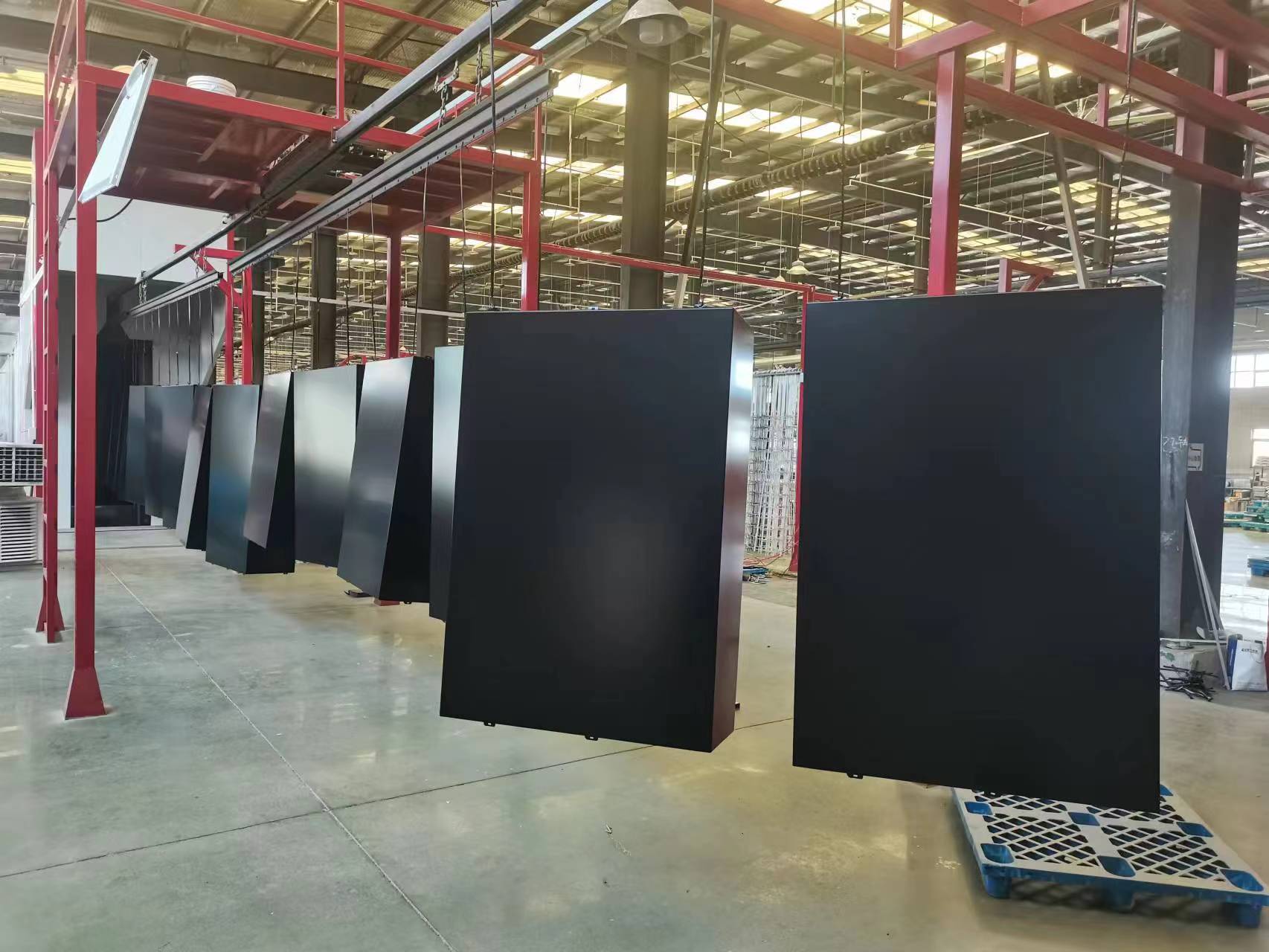
Panel IDs, coated faces, hanging points and batches are rechecked before entering the finishing line.
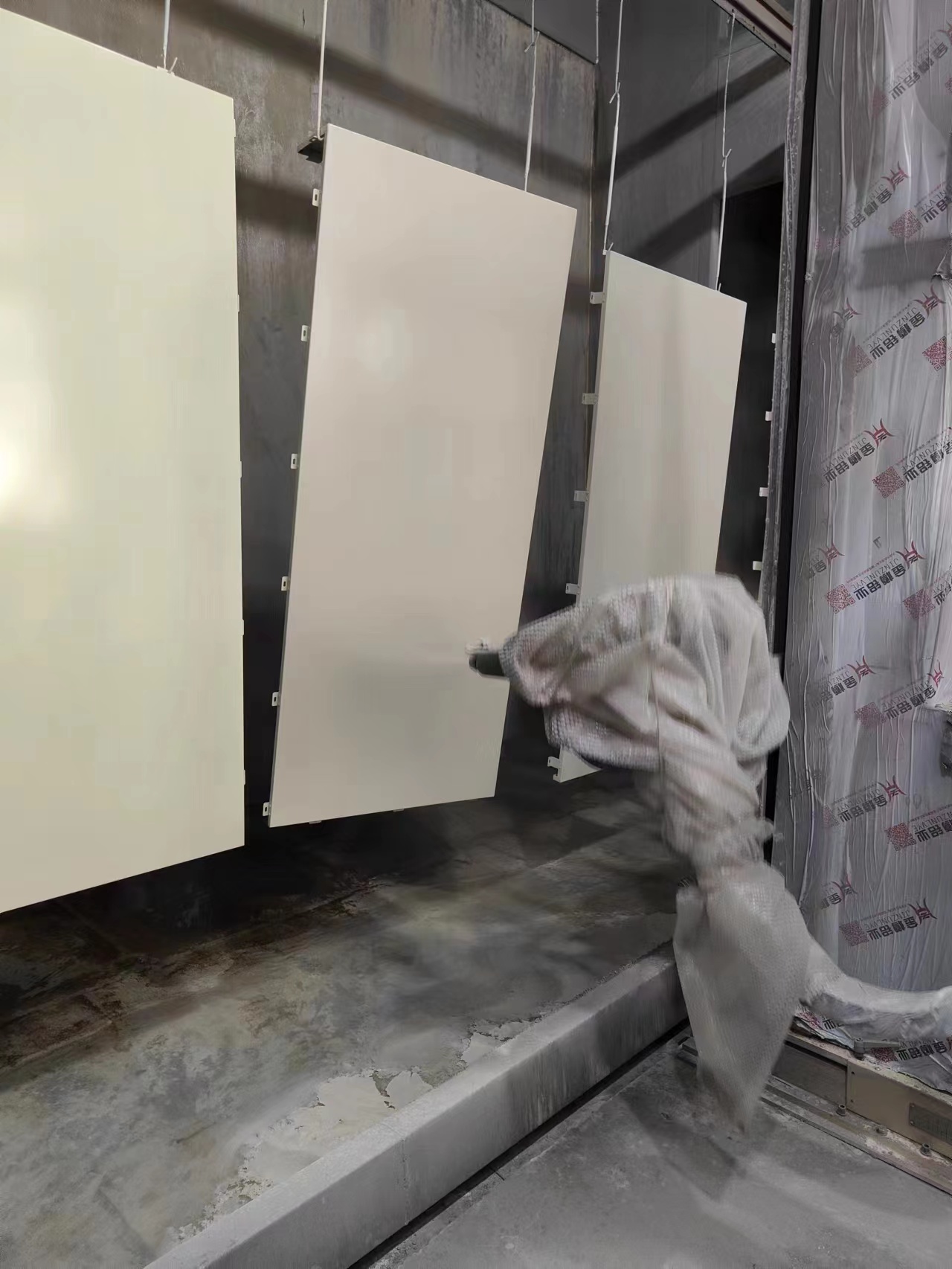
Color and gloss follow the approved color sample; equipment operation alone does not mean appearance has been approved.
Color, gloss, surface integrity, edge coverage and panel IDs are checked under consistent lighting before protection and packing.
Specific inspection items, measurement methods, allowable tolerances and sampling frequencies are determined jointly by order drawings, approved samples, contracts and applicable standards. Process photos do not replace these approval documents.
Confirm the sole production version, revision records, panel IDs, quantities, front and back faces, datums and exclusions.
Check material, temper, thickness, surface protection, quantity and visible abnormalities, and create a record.
Use the agreed methods to confirm dimensions, hole positions, curvature, construction, color sample or relief detail effect.
Review key operations by panel ID and batch; isolate nonconforming pieces before deciding on rework or renewed approval.
Check dimensions, panel faces, edges, details, color, direction, panel IDs and completed quantities.
Check finish separation, corner and raised-area protection, packing sequence, quantities and accompanying documents.
Control versions, panel IDs, dimensions, construction and details.
Retain the agreed measurement results and approval status.
Serve as the physical basis for color, finish or artistic effect.
Link processes, nonconformance handling and finished-product IDs.
Corresponds to installation zones, quantities and packing sequence.
| Facts the Client Can Check | Question to Answer | Suggested Evidence to Retain |
|---|---|---|
| Are the versions consistent? | Do production, inspection and packing use the same drawing version and panel IDs? | Production drawings, revision records and panel-ID list |
| Are the methods consistent? | Which methods and locations are used to judge dimensions, flatness, curvature, color or effects? | Inspection agreement, measurement records and approved samples |
| Has the batch been approved? | When was the first article approved, what was approved, and how is renewed approval handled after a nonconformance? | First-article records, nonconformance disposition and renewed-approval records |
| Are finished products traceable? | Can finished products, panel IDs, batches, packing and installation zones be matched to one another? | Product labels, packing photos and packing lists |
| Is the delivery complete? | Have quantities, surplus material, replacement pieces, protection and accompanying documents been reviewed? | Delivery lists, surplus-material records and receipt documents |
General drawing, material, first-article and numbering management can be shared. The construction and appearance requirements of each product must be approved separately.
| Product | First-Article Focus | Batch Focus | Pre-Delivery Focus |
|---|---|---|---|
| Aluminum Solid Panels | Flat patterns, hole positions, returns, curvature, welding and details | Grouped dimensions, forming datums, weld finishing and finish direction | Panel faces, color, corners, panel IDs, reinforcement and installation interfaces |
| Aluminum Honeycomb Panels | Face and back sheets, core, overall thickness, adhesive system and edges | Core direction, lay-up, pressing and curing, flatness and thickness condition | Panel faces, edge closure, grooves, details, finish direction and large-panel protection |
| Aluminum Reliefs | Artwork, proportion, depth, detail, color and a detail sample | Subject outlines, cross-panel continuity, texture, coloring and panel-ID direction | Overall composition, joints, frame, raised-area protection and trial-layout records |
Without defined measuring locations, methods and approved samples, the result cannot be summarized only as “qualified.”
The first article verifies the drawings, equipment route and inspection criteria; completing the batch and then reworking everything is not a substitute.
Panel IDs enter production, inspection, packing and installation layouts so the client can trace the position and condition of every panel.
A product name alone cannot determine the equipment route. We recommend sending the information below with the latest drawings. Items not yet decided can be marked “recommendation requested.”
| Information Category | Recommended Information | Used to Confirm |
|---|---|---|
| Project and application | Product type, application location, interior/exterior conditions and project destination | Product boundaries, finish and packing requirements |
| Drawings and versions | Plans/elevations/details, 3D model, drawing number, revision and changes | Flat patterns, fabrication datums, interfaces and panel IDs |
| Materials and construction | Material, temper and thickness; honeycomb-panel layers or relief-depth requirements | Equipment, forming, bonding and inspection routes |
| Finishes and samples | Color, gloss, texture, direction, color sample or physical reference | Sampling, batch finish and acceptance basis |
| Quantity and schedule | Total quantity, phased plan, first-batch milestone, final-batch milestone and anticipated replacements | Production schedule, first article, packing and delivery plan |
| Quality and delivery | Applicable standards, key inspections, sampling agreement, numbering and packing requirements | Inspection records, approval basis and accompanying documents |
After receiving the latest drawings, material construction, finish requirements, quantity and delivery schedule, we confirm equipment compatibility, the first-article plan, quality priorities and a written quotation.